How long should kids practice hockey at home
For parents who want a clock number for one home practice tonight, not a full weekly dryland plan.
The short answer: One home session should stay short. About 12 minutes for kids under 10. About 15 minutes for ages 10 to 13. About 20 minutes for ages 14 and up. Pick one skill. Run 3 to 5 drills from that skill. Then stop.
That clock is for a single practice block at home, not a full week of dryland. For week-level volume, use how much dryland training by age.
Age bands for one session
Puckmaxxing is built for ages 7 to 17. Match the timer to the band, not to how long the rink practice ran.
| Age | One home session |
|---|---|
| Under 10 | About 12 minutes |
| 10 to 13 | About 15 minutes |
| 14 and up | About 20 minutes |
Inside that window, stay on one skill. Three to five drills is enough. A finished short block beats a long plan that dies halfway through.
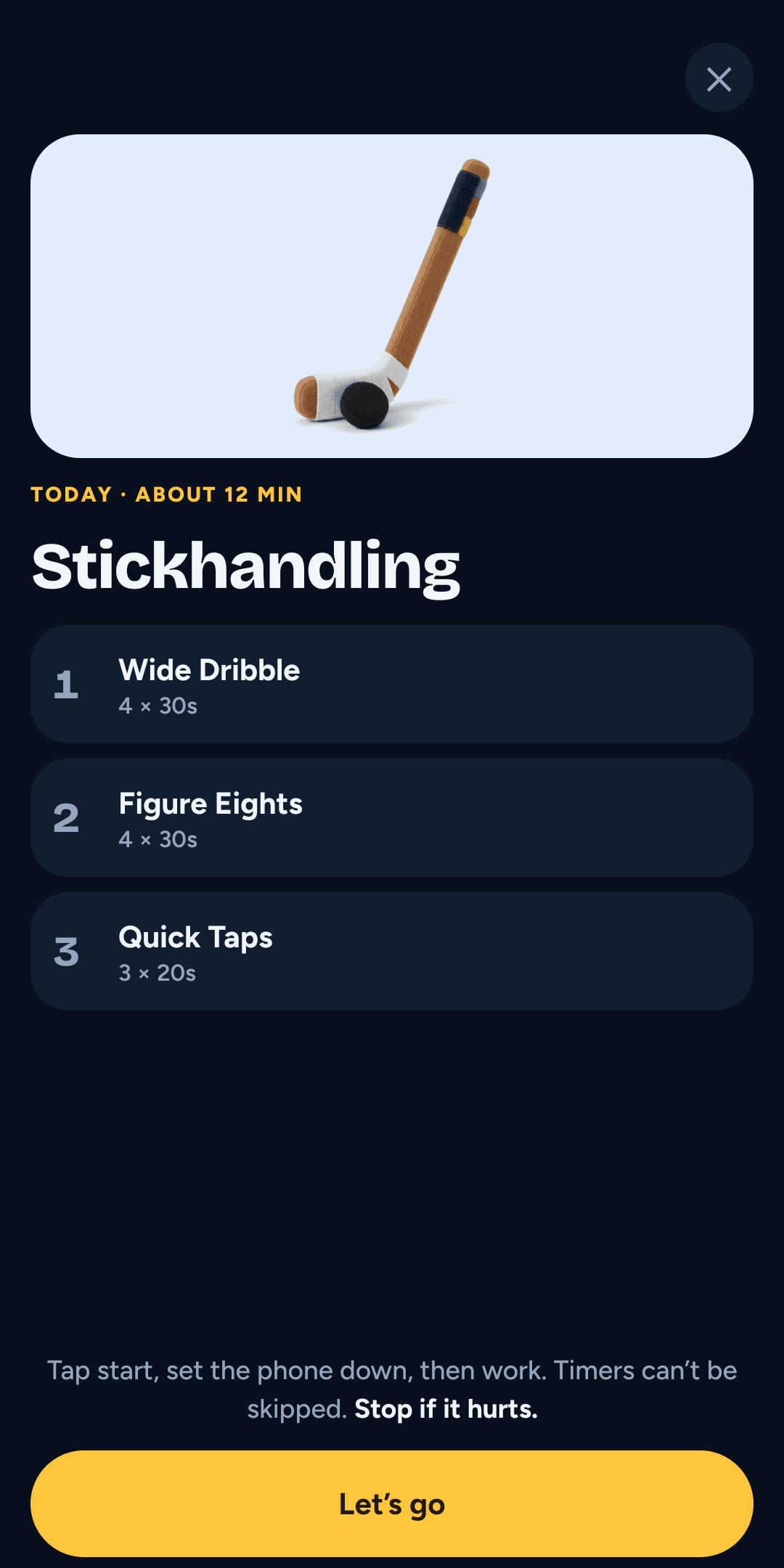
Example: Maya (example name), age 9, does about 12 minutes of stickhandling only. Example: Jordan (example name), age 12, does about 15 minutes of shooting only. Example: Sam (example name), age 15, does about 20 minutes of bodyweight strength only.
One skill, then stop
Do not stack stickhandling, shooting, edges, and strength into the same short block. Choose one:
- Stickhandling
- Shooting
- Edges and athleticism
- Strength and core
Skill menus live on the guides. Start with stickhandling drills at home or shooting drills at home. The broader map is off-ice hockey training at home.
Drill cues and timings come from the app. There is no in-app warm-up, so keep the practice block itself on the age clock above. If your player needs light movement first, do that before you start the timed drills, then keep the drill block short.
What fits in 12, 15, or 20 minutes
A stick and a ball or practice puck cover stickhandling on a small patch of floor. Most shooting drills need a real net. Five freeze and weight-shift drills do not. A tarp is not a net.
Strength work at home is bodyweight only. Edges and athleticism can support balance and the athletic base. Home work cannot train skating. Skating stays at the rink.
Quality beats count. Clean reps inside the age window matter more than adding extra drills past the clock.
How Puckmaxxing times a session
Puckmaxxing is on the App Store and Google Play. It has 90+ drills across stickhandling, shooting, edges and athleticism, and strength and core. House league is free in every category. Climbing past House needs a paid plan.
Open one skill. Take 3 to 5 drills. Let the app supply the cues and timings. Match the whole block to about 12, 15, or 20 minutes by age. When the block is done, stop.
If starting is the hard part, read how to get your kid to practice hockey at home.
FAQ
How long should a 10-year-old practice hockey at home?
About 15 minutes. Age 10 sits in the 10 to 13 band. One skill, 3 to 5 drills, then stop.
How long for an 8-year-old or a 14-year-old?
Under 10, about 12 minutes. Ages 14 and up, about 20 minutes. Same rule either way: one skill per session.
Is one short session enough, or do we need a full dryland hour?
For home, the short block is the point. Team dryland and ice time are separate. This page is only about how long one home practice should run. Week planning is on how much dryland training by age.
Can a longer home session train skating?
No. Home work cannot train skating. Keep the clock short and use home time for stick work, shooting with a real net when needed, edges and athleticism, or bodyweight strength.
Does the app include a warm-up?
No in-app warm-up. Plan any light movement before the drill block, then run 3 to 5 drills from one skill inside the age minutes.
Start tonight on the age clock
Pick the band: about 12, 15, or 20 minutes. Pick one skill. Do 3 to 5 drills. Stop while form is still clean.
The home page is the short version of how the app works.
Match the clock. Do the block. Stop.
About 12, 15, or 20 minutes by age. One skill. 3 to 5 drills. Puckmaxxing is on the App Store and Google Play.
Suggested exercise for young athletes, not medical advice. Stop if it hurts. Tell a grown-up.